

I Made Wahyu Widyarsana
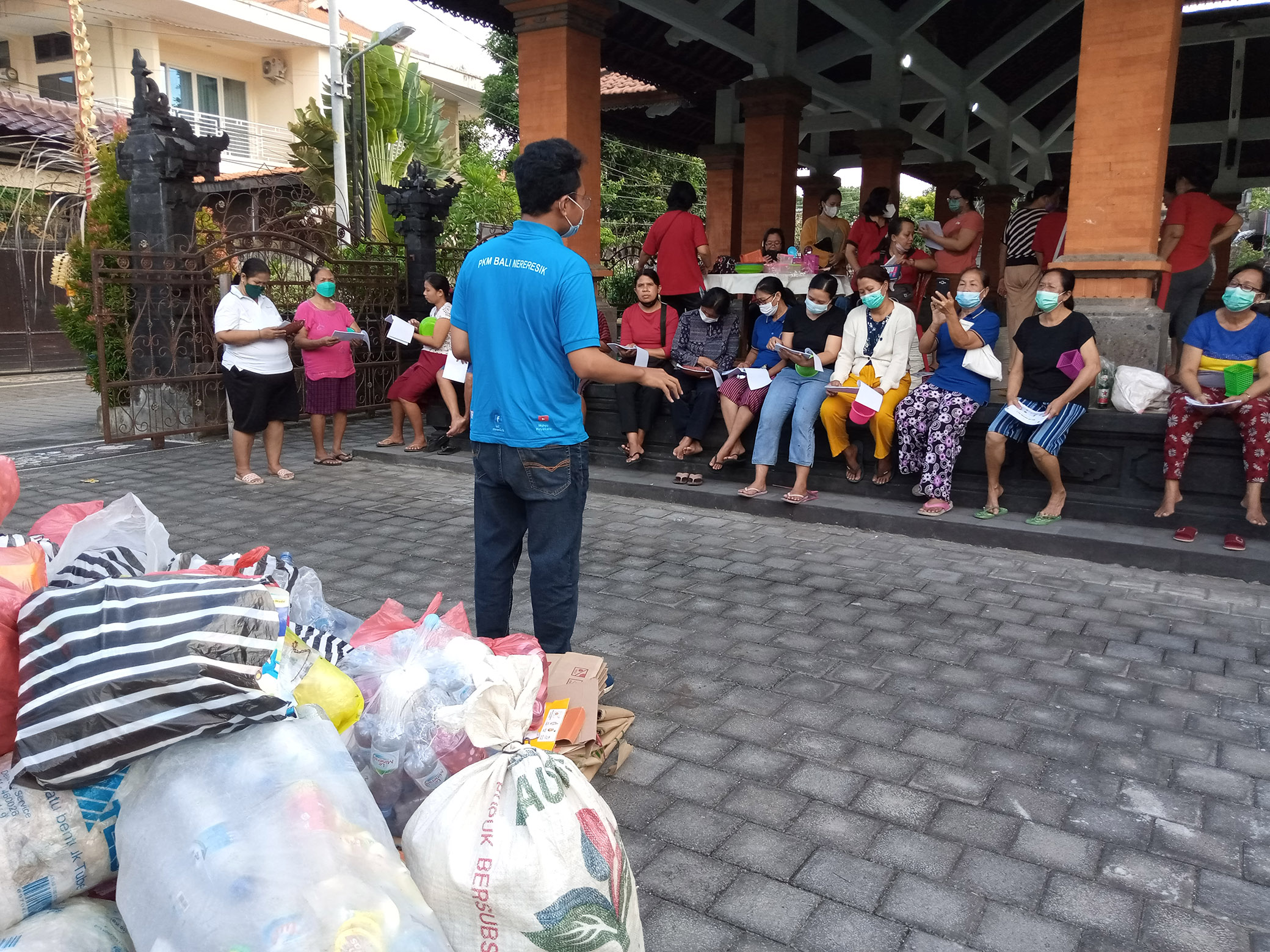
In 2020 became one of the important milestones of ITB travel that had been conducting education services to the Indonesian people for 100 years. Therefore, the direction of the development of the LPPM-ITB 2000-2025 community service program is an important part of ITB's contribution to the following 100 years to be more independent and respected by other nations. By using locally relevant and globally respected keywords, ITB must be valued globally for its various power and efforts in dealing with local problems that occur in the community. At present Pandemi as a disruption that actually also influences the practice of ITB community service that is required to comply with the framework of adaptation of new habits. The impact of the Pandemic on the weakening of the national economic conditions also influenced the landscape of ITB community service in implementing science and technology in the community that must have a direct impact in realizing the most fundamental needs, namely a sense of security in the community. On the one hand, the application of science and technology in the community must also react to social and economic ecosystems in the community that strengthen endogenous development by utilizing local resources and potentials in affected areas, including outside Java and borders or disadvantaged borders, front and outermost (3T). Therefore, every ITB community service activity needs to be coordinated, structured and continuous with the involvement of local and industrial governments, so that the outputs and impacts produced can be more felt by the wider community. Environmental management and protection is one of the government's priority programs that impacts on aspects of health, humanity, economy, and the environment itself. The government responds to the problem of waste that occurs seriously as evidenced by issuing Presidential Regulation of the Republic of Indonesia Number 97 of 2017 concerning National Policies and Strategies (Jakstanas) Management of household waste and household waste types. In this document it is stated that Indonesia has a target of reducing and handling household waste and household waste, among others, the achievement of 30% waste reduction and 70% waste management in 2025. The target refers to the world target, namely Sustainable Development Goals (SDGS) where handling waste is included in sanitation needs. Sanitation needs are contained in Target No. 6 SDGs, namely ensuring the sustainability of the availability of clean water and sanitation. Therefore we need proper waste management to achieve these targets. Optimal waste management is a big challenge that is now faced by almost all regions in Indonesia. Today, waste generation is increasing along with the increase in population. This also happened in the Province of Bali, with data on the number of population that continues to increase from year to year and with this percentage causes a generation of waste in Bali to experience a significant increase. Therefore, based on the expertise based on the science and technology owned, LPPM ITB through community service activities This top-down scheme can propose the concept of circular economic oriented facilities, so the waste that enters the landfill area is processed first as a recycling material and material Others such as RDF will bring economic benefits to the local government. To reduce dependence on the landfill, it is necessary to empower to increase the capacity to reduce waste at the source and regional level, such as conducting socialization, education, and training accompanied by provision of props assistance to increase the capacity of related waste management. In this proposal the PM is submitted in the Province of Bali so it is in the cluster: Circle Zone 4: Outside Zone of Java, with the target of activities in the form of initiation of community service activities at the Sarbagita Regional TPA and community empowerment in management at the source level to minimize waste transported to the landfill. This PM activity will partner with government institutions, local universities, and the general public (priority villages will be chosen in the implementation of PM). The evidence of correspondence and support letter from government partners namely UPT Waste Management (DKLH Bali Province) attached to this proposal. The location of the PM implementation at the Sarbagita Regional TPA in Suwung, as well as priority villages in the Sarbagita area (while planned in Kesiman Kertalangu Village (East Denpasar District), or other options in Bantas Village (Tabanan), Pererenan Village (Badung), and PadangTegal Village (Ubud ), and it is very possible that the village's choice will change with the implementation of the PM, so it is certain that the affected community is quite significant. Furthermore, responding to the post -pandemic situation regarding the need for national economy recovery/reactivation efforts, the priority field in the proposed Community Service Program (PM) is empowerment Regions/villages, as well as indirectly contribute positively to the creative and tourism industries where Bali will host the G20 High Level Conference (Summit) in the end of 2022, so it is important to maintain the image of environmental management in Bali that supports the tourism climate Sustainable based on SDGs and in line with the philosophy adopted by the local community, namely "Tri Hita Karana" where one of its teachings is to maintain the relationship between humans and their environment.